





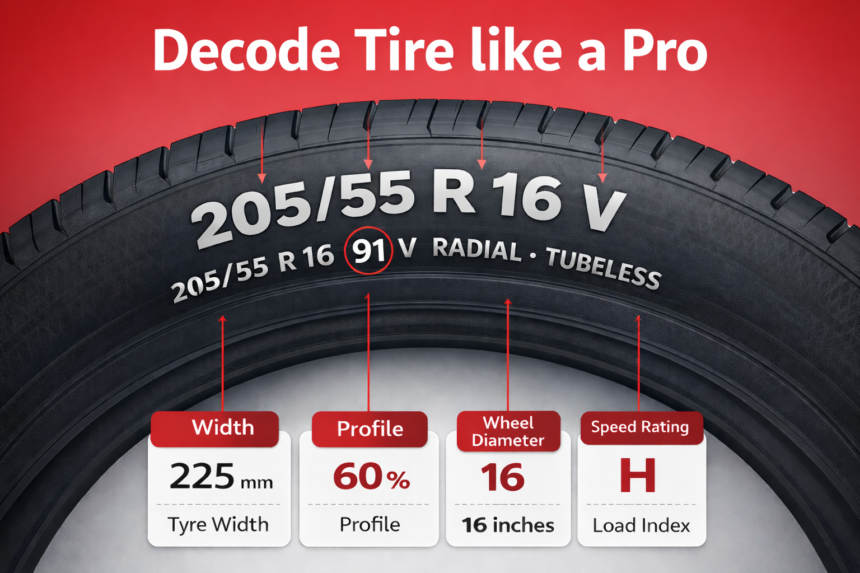
When you look at a car tire, you probably see a bunch of numbers and letters on the side and think, “What does that even mean?” If that’s you — you’re not alone. But those markings are incredibly important for safety, performance and choosing the right replacement tires. So next time you are purchasing Tyres for your vehicle do look and check information on the Tyres.
Why Tire Sidewall Markings Matter
A tire’s sidewall contains crucial information about its Size , Load capacity , Speed rating , Manufacturing standards , Traction and temperature ratings
Understanding these lets you pick the right tire for your car, driving style, weather conditions and even fuel efficiency.
How to Read Tire Sidewall Codes
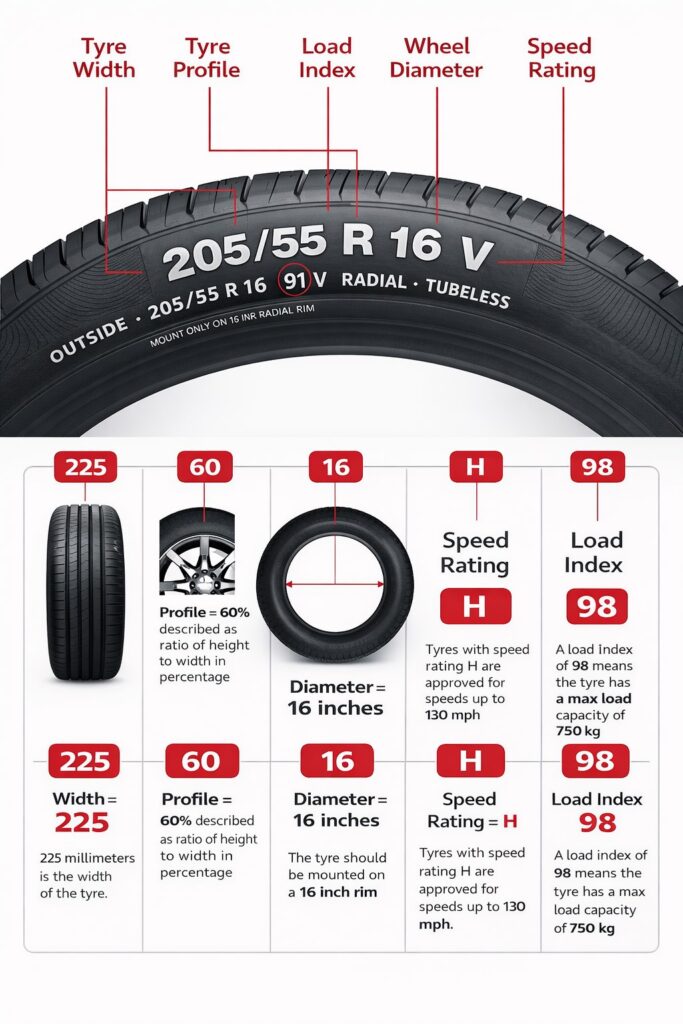
When you look at a tire’s sidewall, you might see something like:
“205/55 R16 91V” and here’s what each part means:
➤ 1. Tire Width (205 mm)
This is the width of the tire from sidewall to sidewall in millimetres.
- A larger number = wider tire
- Wider tires can offer better grip, but may affect fuel economy.
➤ 2. Aspect Ratio (55)
This number is the height of the sidewall expressed as a percentage of the tire width.
- 55 means the tire’s sidewall height is 55% of 205 mm.
- Lower numbers (e.g., 40) mean a shorter sidewall often better for handling however not suited for broken road.
➤ 3. Construction Type (“R”)
- R stands for Radial tire, which is the most common tire type today.
- Radial tires are engineered for good grip, fuel efficiency and ride comfort.
➤ 4. Wheel Diameter (16 inches)
This tells you what rim size the tire fits.
- You must match this to your wheel size or as recommended by manufacturer.
➤ 5. Load Index (91)
This number tells you how much weight the tire can carry.
A higher number = more load capacity. Always choose a tire that supports the vehicle’s weight plus cargo.
➤ 6. Speed Rating (V)
This letter shows the maximum safe speed the tire is designed for.
Examples:
- H — up to 210 km/h
- T — up to 190 km/h
- S — up to 180 km/h
Other Markings You See on Tyre Sidewall
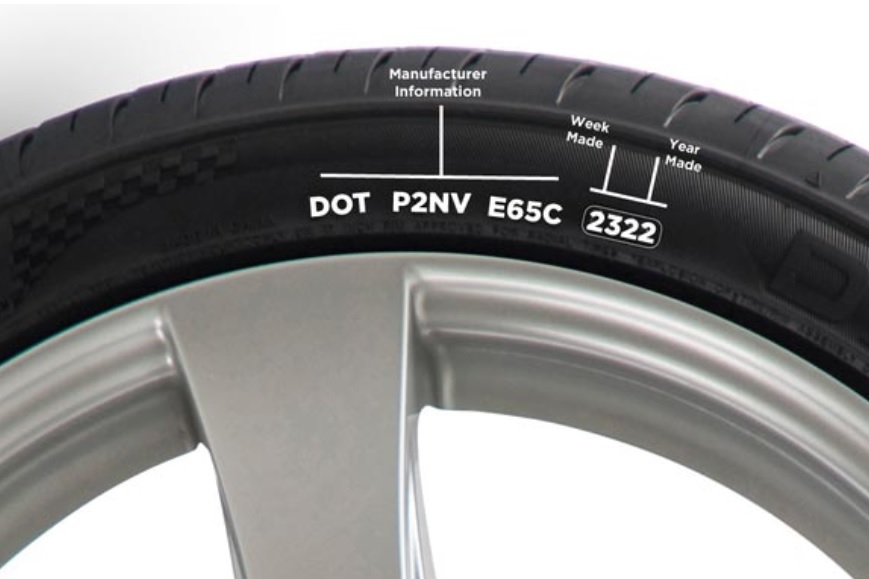
Besides the main code, tires often include:
✔ DOT Code — Indicates compliance with safety regulations and the date of manufacture like 3425 where “25” is the year and “34” is week of year 2025. As a thumb rule it is recommended to check date of manufacture and avoid buying tyre which are older than 1 year of their manufacture.
✔ Treadwear, Traction & Temperature Ratings — Help you understand performance in different conditions.
✔ Max PSI — Maximum air pressure the tire can safely handle.
So what seems like a string of random letters and numbers actually tells a lot about tire and read the information and choose wisely next time you replace your tyre set.