





A few years ago, ADAS ( Advanced Driving Assistance Systems) sounded like a premium feature meant only for luxury cars primarily due to costing issues however today, it has quietly entered the mainstream. Cars from brands like Tata Motors, Mahindra & Mahindra, Hyundai Motor India and Honda Cars India are now offering Advanced Driver Assistance Systems as a major selling point. The voice is simple: more technology, more safety and fewer accidents on roads.
But on Indian roads, the story is not that simple.
Many drivers are now asking a very valid question — is ADAS actually helping in India, or is it creating new problems? The honest answer is: ADAS is useful, but only when people understand what it is — and what it is not.
First, let’s clear one big misunderstanding
A lot of buyers still think ADAS means the car can almost drive itself however the real truth is “It can’t.”
Most cars in India currently get Level 2 ADAS, which means the car can assist you, but it cannot replace you. It may warn you, also brake (AEW- Advanced Emergency Braking) in some situations, or help you stay in lane but the driver must remain fully alert and in control of car at all times and therfore here it is the driver overconfidence as one of the biggest risks with assisted driving systems. And this is exactly where India’s ADAS problem begins.
Why ADAS can feel risky on Indian roads
The biggest issue is not the technology itself but where and how it is being used. ADAS works best in a structured environment:
- proper lane markings
- disciplined traffic
- predictable vehicle movement
- clean signage
- fewer sudden surprises
Now compare that to a typical Indian road.
- bikes squeezing through tight gaps
- auto cutting across your vehicle from front
- pedestrians appearing suddenly on road
- wrong-side riders
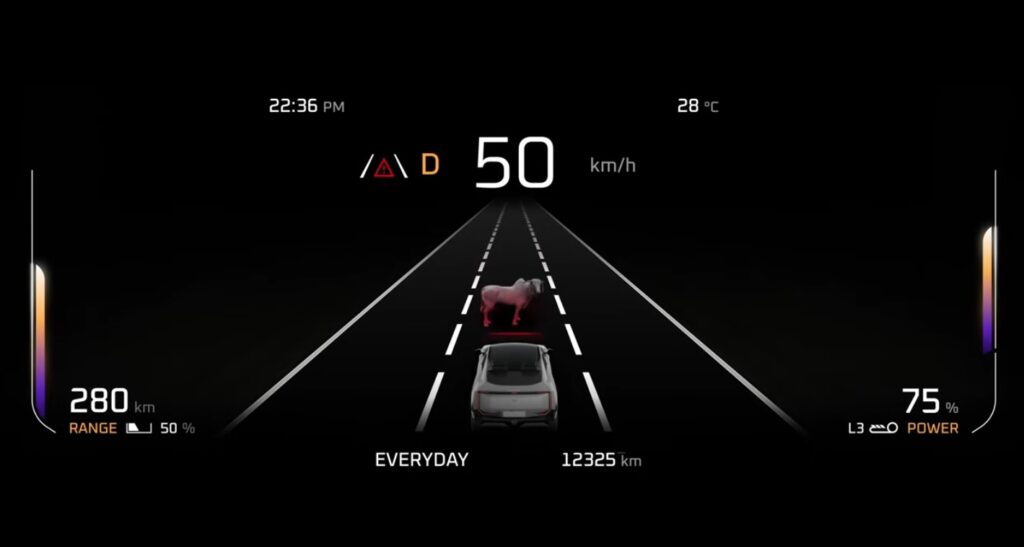
- stray animals on highways are quite regular
- faded or missing lane markings
- broken road edges and patchy dividers
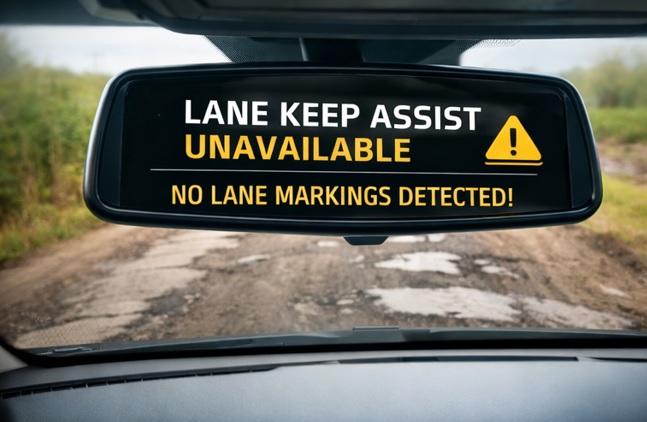
In such conditions, the car’s camera or radar may not always interpret the road the way a human driver does and the Indian traffic patterns, road infrastructure and driving behaviour are very different from the environments where most ADAS systems are originally validated.
So due to all this what happens is sometimes the system becomes too sensitive, and sometimes it becomes unreliable.
The most common way ADAS can create danger
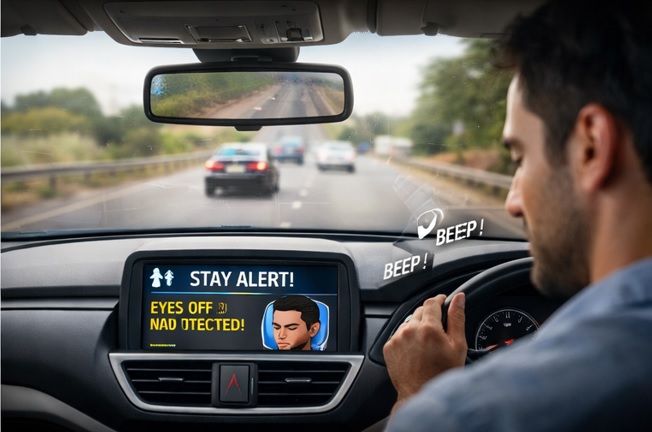
Here the biggest risk is actually the driver behaviour. A person switches on adaptive cruise control or lane assist and subconsciously starts relaxing too much and results in – Attention drops & Hands get lighter on the steering.
And that’s dangerous on any road however in India, it can become excessively dangerous very quickly because Indian traffic doesn’t give you a 5-second warning before doing something very stupid.
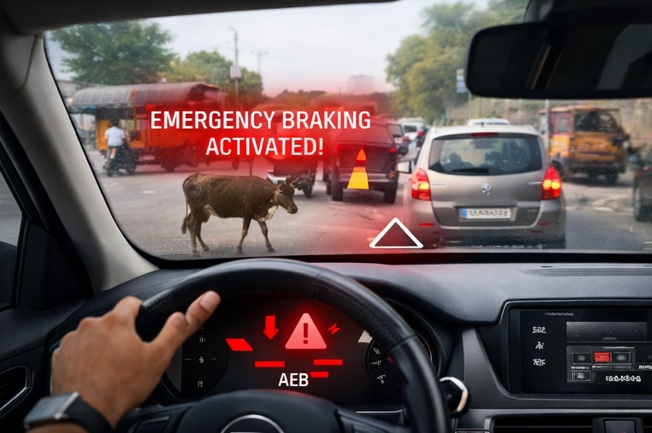
Possible scenerios may incude – One biker cutting in, one pedestrian crossing, one cow stepping out, and the driver suddenly has to react. If the driver was mentally relying on the system, that reaction time gets slower.
That is why ADAS can indirectly increase risk not because it is bad technology, but because it can create a false sense of confidence.
Lane assist is where many Indian drivers get frustrated
On paper, Lane Keep Assist sounds brilliant however in reality, it can feel awkward in India.If the lane markings are poor or inconsistent, the system may:
- not detect the lane properly
- give random steering input
- or keep beeping unnecessarily
That’s why many owners say:
“The system works on clean expressways, but feels annoying in real-world city use.”
Automatic braking is useful — but can also surprise drivers
Features like Forward Collision Warning and Automatic Emergency Braking (AEB) are among the most genuinely useful ADAS functions. In fact, some Indian users have shared that AEB or collision warning helped avoid low-speed impacts and driver inattentive moments. Others, however, reported sudden warnings or braking in dense traffic, have sometimes resulted in tailend collisions were rear moving vehicle driver could not anticipate that vehicle ahead will stop suddenly due to ADAS
This is the problem with Indian traffic.The system may be technically “right” — but the environment around it is so chaotic that even a correct intervention can feel wrong.
So is ADAS useless in India?
Absolutely not. That would be the wrong conclusion. In fact, some ADAS features are genuinely valuable for Indian buyers — especially on highways and long drives.
- Blind Spot Monitoring
- Rear Cross Traffic Alert
- Forward Collision Warning
- Automatic Emergency Braking
- Driver Attention Alert
- 360-degree camera
- Adaptive cruise control on expressways
These are practical, helpful, and can genuinely reduce stress and prevent mistakes by driver. Actually the problem usually starts when buyers think ADAS is a self-driving feature in every Indian condition but It isn’t.
What can be done to make ADAS actually effective in India?
1) Carmakers need to tune ADAS specifically for India
ADAS systems should not just be imported from Europe or Korea and dropped into India but they need calibration for wide arrays of problems already listed and some manufacturers are already localising their systems for indian road scenerios more aggressively, and that is the direction the industry must take.
2) Better driver monitoring is essential
If the car notices that:
- your eyes are off the road
- your hands are off the wheel
- you are too distracted
…it should start warning you aggressively because the biggest danger on Indian roads is still human behaviour.
3) India seriously needs better lane markings and signage
As ADAS depends heavily on
- visible lane lines
- reflective road markings
- clear road edges
Without that, even a good system will feel average.
4) Dealers and brands must stop overselling ADAS
This is a major problem where a lot of buyers are still sold ADAS like this:
“Sir, car khud sambhal legi.”
That kind of sales pitch is dangerous and ADAS should be explained honestly.
Final Verdict
ADAS is not making India’s roads more dangerous on its own but combinations of different situations like – roads not ready for that technology and also drivers expecting too much from it.
In the right conditions, ADAS is a very useful safety layer to prevent collisions however in the wrong hands, or on the wrong roads, it can become confusing, irritating, or risky as well. And until India improves road discipline, infrastructure and user awareness, ADAS should be treated as a smart co-driver rather then a replacement for the driver.